SUP
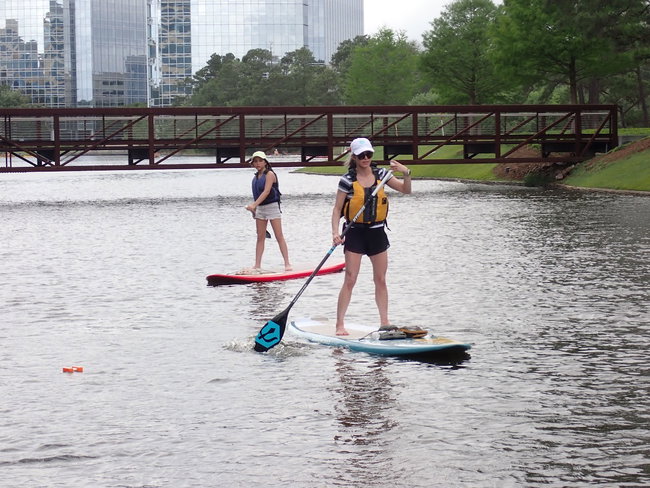
L1: Intro to SUP
Level 1: Intro to SUP Course Overview The Introduction to SUP course is designed as a short program emphasizing safety, enjoyment, and skill acquisition for entry-level individuals in the public, private, and commercial setting. If you’re a student who would like a resource to prepare for this course, ACA is pleased to provide a free online paddling safety course, here. A certificate of completion is included! Course Prerequisites Acknowledgment of personal compliance with the ACA Essential Eligibility Criteria (EEC) Agree to comply with the ACA Code of Conduct No prior paddling experience or training is required to participate in this course Course Duration The course duration should be adjusted to best fit the needs and goals of the participants. Suggested time: Half a day to one day (4-8 hours). Course Location / Accessible Venues Flat water, protected from wind, waves, and outside boat traffic, with current less than 0.5 knots, and within swimming distance of shore. Number of Participants 5 participants : 1 Instructor; with an additional instructor, the ratio can be 10 : 2. Instructor Level 1 or higher ACA Instructors within their discipline. Course Outline The following is a general summary of course content for the Level 1 Introduction to SUP course. The content covered and sequence of instruction should be adjusted to best fit the participant’s needs, class location, and time allowance. The course content includes the National On Water Standards for human powered craft . The full rubric for Level 1 can be found in the above link, pages 17-65. Introduction, Expectations, and Logistics Introduction, Expectations, and Logistics: Welcome, introductions, paperwork Student and Instructor course expectations and limitations Course itinerary and site logistics Review waiver, assumption of risk, challenge by choice, medical disclosure About the ACA Life jacket policy (always wear on water) Appropriate personal behavior No alcohol / substance abuse Proper etiquette on and off the water Respect private property Practice Leave No Trace ethics Preparing to Depart Discuss weather conditions, forecasts, and other environmental hazards (wind, water, weather, waves) Evaluate hazards to navigation Discuss importance of developing good judgment and group responsibility for a trip Evaluate individual’s ability, water comfort, and confidence prior to trip Warm up to reduce injury Make sure the board is securely fastened to the car or racks, using proper tie downs, straps, or knots. Review proper techniques to safely lift and carry the board on shore Review life jackets appropriate for the operator’s size, craft, and activity, assuring all others in the group are properly wearing their life jacket Inspect the board and all safety equipment to meet state, federal, and local requirements for the vessel and activity Describe and follow safe paddling practices (behavior, substance abuse, on water and land etiquette, Leave No Trace ethics) Review elements of a float plan (Who, What, When, Where, filing practices) Review personal equipment needed for the craft, activity and environment Prepare board for departure: stowing gear securely, and ensuring it is balanced How to hold the paddle in correct orientation and grip for effective paddling Maneuvers: to be performed with appropriate and efficient strokes, while maintaining the trim and balance of the board Enter and launch board from shore in a controlled manner, checking for clear departure Propel the board forward in a straight line 15-20 boat lengths Stop the board within two board lengths Move the board backwards 3-4 board lengths Turn the board from a stationary position 180° to the right and left Move the board sideways 10 feet (3 meters) to each side Propel the board in a figure of 8 course around markers 3-4 board lengths apart Turn the board while maintaining forward motion 90° to the right and left Arrive at destination point, checking for clear approach, and exit the board in a controlled and safe manner Technical Knowledge Review paddling equipment, terminology (kayak and paddle), and care of gear Instructor review of additional personal and group gear, including, but not limited to: Environmental supplies (food, water, appropriate clothing, sunscreen, etc.) Navigational and signaling tools (maps, charts, whistle, etc.) Safety and rescue tools Repair kit First aid kit (appropriate to training) Review the dangers of paddle sports and how to plan an appropriate course to avoid potential hazardous situations. How to avoid and prevent cold water shock, hypothermia and hyperthermia by choosing proper clothing; recognizing and treating early symptoms; 1-10-1 rule. Recognize the importance of hydration Recognize and appropriately use communication (paddle/oar and whistle) signals Review basic navigational rules for inland waterways Develop awareness of the group and effective on water management techniques Describe best paddling practices: posture, balance, awareness of body-kayak-blade relationship Secure the kayak and equipment before leaving unattended, with attention paid to environment and conditions Safety & Rescue Demonstrate awareness of rescue priorities: people, board, paddle, gear Use safe progressions T-RETHROG (Talk, Reach, THrow, ROw, Go) - including throwable floating aid or throw bag use Describe the responsibilities of: the group, rescuer, swimmers Identify and demonstrate the use of appropriate rescue and safety gear for the board and planned activity Exit the craft after capsize, using proper body position and contact with the craft and paddle. Rescue self and the board using multiple effective self rescue techniques (e.g., recover board and paddle, swim self and board to shore, with and without leash). Deep Water Rescue: unassisted remounting of board from side or back of board Rescue a person in the water and capsized board using appropriate techniques and equipment Techniques for bulldozing or towing a board or swimmer to shore Conclusion and Wrap Up Group debrief / individual feedback Course limitations Importance of First Aid and CPR Importance of additional instruction, practice, and gaining experience Importance of appropriate level of safety and rescue training Life sport / paddling options Local paddling groups / clubs Handouts / reference materials Participation cards ACA membership benefits and join process This course content meets the National On Water Standards for human powered craft ( https://www.usnows.org/assess-and-update . The National On Water Standards for human powered craft (NOWS) can be used to: Evaluate other paddlers and provide effective feedback Effectively make documented skill assessments © American Canoe Association Date of last revision: 10/28/2025 https://americancanoe.org This curriculum is managed by the ACA Introduction to Paddling (IPC) Committee. To connect with the leadership of this committee, please view the SEIC Committee rosters on the ACA website. See skill course overview here: https://americancanoe.notion.site/Level-1-Introduction-to-SUP-Skills-Course-999eb9a60777428688dc4403c704b705?pvs=143
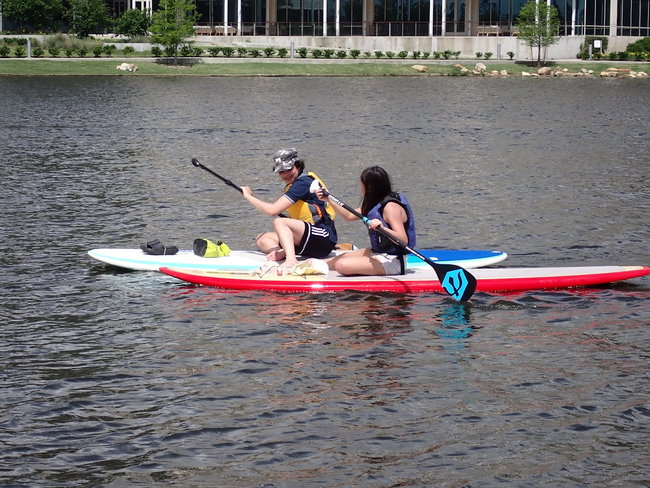
L2: Essentials of SUP
Level 2: Essentials of Stand Up Paddleboarding (SUP) Course Overview The Essentials of Stand Up Paddleboarding course is designed to develop and refine the skills needed to paddle effectively in conditions where wind, waves and current are present. This course is also designed to increase knowledge of SUP equipment. Course Prerequisites Acknowledgment of personal compliance with the ACA Essential Eligibility Criteria (EEC) Agree to comply with the ACA Code of Conduct No prior paddling experience or training is required to participate in this course Course Duration 4 hours (or more at instructor discretion) Course Location / Accessible Venues Waterway with access to safe landing within 0.5 nautical miles/0.9 kilometers from shore 5 - 10 knot winds Note: conditions should not exceed 1 foot/0.3 meters waves or 2 knot currents 课程规模 5名学员:1名教练培训师;若增加一名合格的助理,比例可调整为10:2。学员人数上限为10人。 更多详情,请参阅《SEIC政策手册》第7章。 Instructor This course may be offered by Level 2: Essentials of SUP (or higher) ACA Instructors, Instructor Trainers, or Instructor Trainer Educators. Minimum Personal Equipment Properly fitted PFD, SUP paddle, Stand Up Paddleboard, appropriate clothing for the weather. Succeeding Courses Level 3: River SUP Skills, Assessment, or Certification Course Level 3: Surf SUP Skills, Assessment, or Certification Course Level 3: Coastal SUP Skills, Assessment, or Certification Course The following is a general summary of course content for the Essentials of Stand Up Paddleboarding course. The content covered, and sequence of instruction should be adjusted to best fit the participant’s needs, class location and time allowance. Introduction, Expectations, and Logistics: Welcome, introductions, paperwork Student and Instructor course expectations and limitations Course itinerary and site logistics Review waiver, assumption of risk, challenge by choice, medical disclosure About the ACA Life jacket policy (always wear on water) Appropriate personal behavior No alcohol / substance abuse Proper etiquette on and off the water Respect private property Practice Leave No Trace ethics The Paddling Environment Water Weather Wind Waves Personal Preparation Personal ability Swimming ability Water comfort and confidence Fitness, conditioning, and warm up Safe paddle and board handling Safety and rescue considerations Personal equipment (reviewed by Instructor) On Shore Presentations Personal clothing, wetsuits, and gear (shoes or no shoes – depends on environment) PFDs (required by Coast Guard law outside of surf zone) Safety equipment (whistle) History of the sport: indigenous roots to modern day SUP Develop awareness of SUP destinations (local, regional, and national) Board and paddle terminology SUP Equipment SUP Board Design (all-around, touring, racing, surf, whitewater) Construction (composite, plastic, inflatable, foam board) Parts How to Carry: 2-person, solo handle, solo overhead or other effective means SUP Paddle Design (intended use, blade angle, blade size, shape) Construction (composite, plastic, aluminum, foam core blade, wood) Parts Sizing (fixed and adjustable paddles) Effective hand placement on the paddle PFDs Inflatable Inherently buoyant How to properly fit and use a PFD SUP Leash Types (coiled, straight, combo, quick release) Parts When and how to use Safety Equipment Dry bags, waterproof containers, deck bags First aid kit Repair kit Communication devices (cell phones, VHF radio, etc.) Sound signaling device (whistle) Tow rope Additional gear for your paddling environment (signaling devices, white light, hydration & snacks, extra layers of clothing, etc.) SUP Safety 4Ws: water, weather, wind, & waves awareness Current dynamics and hazards (river and/or tidal) USCG regulations / safety requirements Proper warm up Launching and landing Entry/exit from the beach, shore or dock (deep enough to protect fin, ease of getting on board) Board trim awareness (nose to tail, rail to rail) Awareness of body, board, and blade Stances Prone position: lying down (swim position) with paddle blade under chest/belly Sitting Kneeling: paddling using double-overhand or over-under paddle grip Neutral with variation/slight stagger: toes forward, knees bent, between hip and shoulder width, trim nose-tail Board wiggle: legs act independently from upper body, head/torso remain over center of board Hybrid/modified stance: one foot drops back 2-3 inches (6-8 cm) enhancing rotation while maintaining balance Surf stance Board trim: transfer weight from nose to tail and rail to rail to affect momentum and maneuverability Maneuvers Forward Paddling: 200 feet/61 meters paddle in a straight line without changing sides; must demonstrate on both the right and left side. (Example: canted stroke or other effective means). Reverse Paddling: Paddle backwards 2 board lengths maintaining directional control without switching hands. (Example: reverse stroke & cross nose draw combination or other effective means). Stop: Completely stop the SUP from a good speed in less than 2 board lengths. Bracing: Allowing the body to recover and maintain balance using the paddle as a support when falling towards or away from the blade. 360: Rotate SUP 360 degrees with limited forward & backward momentum using forward sweeps, reverse sweeps, draw to nose, and cross nose draws. Lateral Movement: Use draws to travel sideways (20 feet/6 meters) on both sides. Turning on the Move: Sweep strokes and static draws while underway to turn board Board Trim: Transfer weight from nose to tail and rail to rail to affect momentum and maneuverability Side Slip: Move board sideways while underway to avoid an obstacle (Example: Draw on the move and Hanging Draw) Pivot Turn: pivot 180 degrees in place with weighted tail Moving Pivot Turn: Pivot 180 degrees while underway with weighted tail Paddle a course using a variety of L2 strokes & maneuvers with an emphasis on blended strokes, controlled tight turns, and efficient board control while maintaining momentum. (Example: Figure of 8 Course or other effective means). Strokes and Bracing Emphasis should be placed on paddle articulation, fluid transitions, utilization of board trim, and effective transfer of power from the paddle through the feet Forward stroke Canted forward stroke Reverse stroke Forward sweep Reverse sweep Draws (side, sculling, hanging draw, draw on the move) Draws to nose/tail and cross nose (static and dynamic) Safety and Rescue Responsibility of the group, individual, rescuer, swimmer Rescue priorities: people, boards, paddles, other gear Signals: Whistle, Paddle, Hand Hypo/Hyperthermia Evaluate water comfort and confidence Techniques for falling Board remount: from side of board or from back of board Assisted remounts: side-by-side, board flip rescue, or other effective means Methods for board and gear recovery Towing: contact tow, leash tow, tow line, or other effective means Day Tripping Trip planning: determine route difficulty and skill requirements Leader qualities: representing the group’s best interests and taking overall responsibility Loading equipment on SUPs: dry, secure, proper trim, accessible Route planning and navigation tools On water navigation Rules of the road Technical Knowledge to Build On Use of float plans Environmental hazards: on lakes, rivers and oceans Conclusion and Wrap Up Group debrief / individual feedback Course limitations Importance of First Aid and CPR Importance of additional instruction, practice, and gaining experience Importance of appropriate level of safety and rescue training Life sport / paddling options Local paddling groups / clubs Handouts / reference materials Participation cards ACA membership benefits and join process © American Canoe Association Date of last revision: 2/8/2024 https://americancanoe.org This curriculum is managed by the ACA SUP Committee. To connect with the leadership of this committee, please view the SEIC Committee rosters on the ACA website. See skill course overview here: https://americancanoe.notion.site/Level-2-Essentials-of-Stand-Up-Paddleboarding-SUP-Skills-Course-d0061cddfa3c480bb0ff9c3ad425f2d1?pvs=143
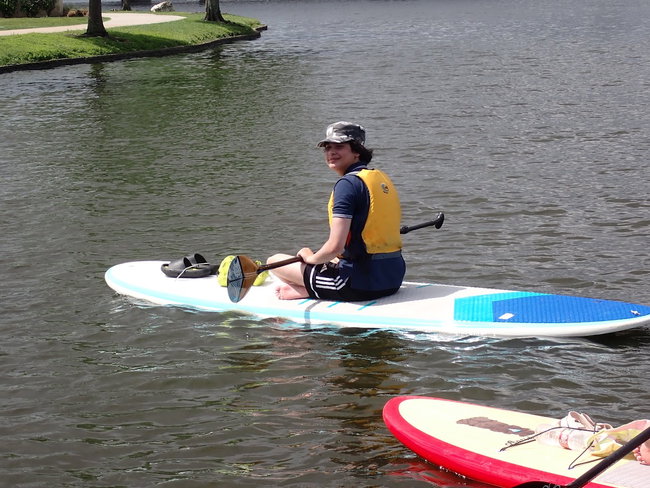
SUP Yoga Skills
SUP Yoga Skills Course Course Outline This course is designed as a short program emphasizing safety, enjoyment, and skill development. The skills and knowledge gained through this course can set the stage for a lifetime of exploration, adventures, a healthy lifestyle, appreciation of water and the natural world, lasting memories with family and friends, and a rewarding experience for all - we paddle because it is fun. The SUP Yoga course is designed to introduce/expose the participant to sufficient skill and knowledge, so they can enjoy yoga while on a Stand Up Paddleboard. Course Prerequisites Acknowledgement of personal compliance with the ACA Essential Eligibility Criteria (EEC) No prior paddling experience or training is required to participate in this course Course Duration Approximately 2 hours (or more at leader discretion**).** Course Location / Accessible Venues Lakes or coastal waters with potential areas of exposure to mild wind and wave conditions, with constant access to safe landing and within 1.5 nm from shore: Winds less than 10 knots Waves less than 1 foot (0.3 meters) Current less than 1 knot Course Size 5 Participants : 1 Leader; with an additional qualified assistant, the ratio can be 10 : 2. Leader/Instructor: This course may be offered by Leaders who have successfully completed and maintained the ACA SUP Yoga Leader Certification or ACA SUP Instructors who hold the previous ACA SUP Yoga Endorsement. Succeeding Courses Level 1: Introduction to SUP Skills, Assessment, or Certification Course Level 2: Essentials of SUP Assessment or Certification Course ACA SUP Yoga Leader Certification Course Course Outline The sequence of this course should be adjusted to best fit the participant’s needs, class location, time allowance, and craft being used. Introduction, Logistics, and Expectations Welcome! We’re so glad that you’ve chosen to further your paddling experience and education by attending this course! Let’s review a few highlights about the ACA Let’s talk about the course itinerary, expectations, and limitations Lay of the land (and water): the logistics of this venue Review liability waiver, assumption of risk, challenge by choice, and medical disclosure PFD policy (see Appendix I) Describe and follow safe boating practices (behavior, substance abuse, on water and land etiquette, respecting private property, and Leave No Trace ethics) The Paddling Environment Water Weather Wind Waves SUP Equipment SUP Board Parts How to carry SUP Paddle Parts Sizing Effective hand placement on the paddle PFDs Inflatable Inherently buoyant How to properly fit & use Leashes Personal Preparation Personal ability Swimming ability Water comfort and confidence Fitness, conditioning, and warm up Safe paddle and board handling Safety and rescue considerations SUP Yoga appropriate clothing Personal equipment (reviewed by Leader) How to secure gear (paddle, water bottle) on board for yoga Launching and Landing Carrying the SUP to and from the water Entry/exit from the beach, shore or dock (deep enough to protect fin, ease of getting on board) Stances: sitting vs. kneeling vs. standing Board stability & trim (nose to tail, rail to rail), “board wiggle” Allow student to get comfortable on the board Rescues Responsibility of the group, individual, rescuer, and swimmer The following are demonstrated by the Leader Techniques for falling Self-rescue Assisted Rescue Towing strategies Basic Strokes and Maneuvers Strokes Basic forward stroke Reverse Sweeps (forward and reverse) Draw (side) Maneuvers Paddle in a reasonably straight line Stop in a reasonable distance Do gradual, wide turns Anchoring Techniques: When appropriate Appropriate spacing Types of weights used for anchors Individual anchor systems Group anchor systems Anchor to shore Anchor to bottom Simple to complex systems Yoga Movements & Poses Stable poses Lower to board Must have a minimum of two points of contact No poses with pressure on head, neck or spine No poses where you can compromise the head, neck, or spine Modifications of poses from land to board Conclusion and Wrap Up This has been a great class! Let’s talk through what we’ve learned with a group debrief and/or individual feedback Course limitations: there is always more to learn, and the skills and concepts we discussed require more practice and experience First aid and CPR training is a very valuable tool and could make the difference between a “near miss” and an emergency requiring outside rescue / first responders Demo advanced maneuvers to inspire paddlers to desire higher level skills Paddling is a lifetime sport - there are local organizations, clubs, events, competitions, and classes through which you can continue your learning and build community. Get connected! Handouts and reference materials (if applicable) APPENDIX I - PFD POLICY FOR SUP YOGA PFDs are required to be worn when paddling from shore to the yoga venue. If anchored, an inherently buoyant PFD may be taken off and placed on the board. If not anchored, an inherently buoyant PFD must remain properly worn. If an inflatable PFD is used, it must remain worn at all times. If local, state, or federal laws mandate PFD wear, they supersede this policy. © American Canoe Association Date of last revision: 2/8/2024 https://americancanoe.org This curriculum is managed by the ACA SUP Committee. To connect with the leadership of this committee, please view the SEIC Committee rosters on the ACA website. See skill course overview here: https://americancanoe.notion.site/SUP-Yoga-Skills-Course-aeb9b751a86c447ba2f2c69e90f8d040?pvs=143
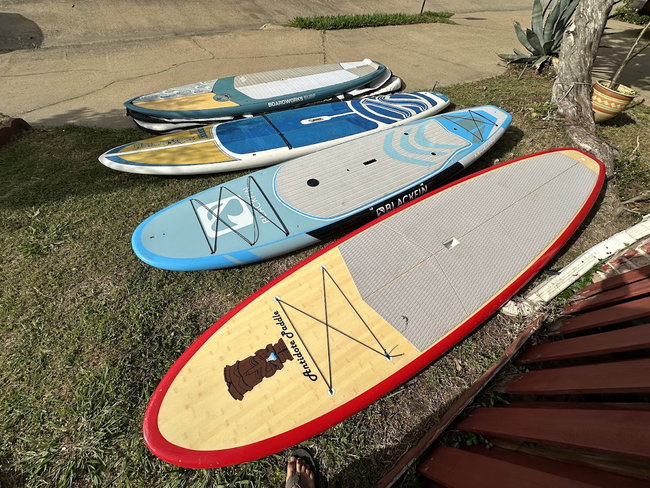
Smart Start SUP
Smart Start for Safe Paddling Certification Criteria - SUP Module Course Overview We expect Smart Start for Safe Paddling facilitators to be able to effectively maneuver their craft and demonstrate competent rescue techniques. This certification allows the facilitator to introduce paddlecraft safety and knowledge to the beginner paddler in a land-based setting. This module is to be taught in conjunction with the Smart Start for Safe Paddling General Knowledge Module. This program was formerly known as “Paddlesports Safety Facilitator” and was officially re-branded as “Smart Start for Safe Paddling” in October 2025. If you’re a student who would like resources to prepare for this course, ACA is pleased to provide the Smart Start for Safe Paddling suite of resources, which features a comprehensive resource book, student activity workbook, facilitator’s guide, and free online coursework. The 100% free Smart Start for Safe Paddling interactive online course can be found here. A certificate of completion is included! This is a 4-year, non-renewable certification. Course Prerequisites Acknowledgment of personal compliance with the ACA Essential Eligibility Criteria (EEC) Be a current ACA Member Understands and acts in accordance with ACA's Code of Conduct Course Duration General Knowledge Module Duration: Minimum of 4 hours Discipline Specific Module Duration: Minimum of 1 hour per module Course Location / Accessible Venues Flat water, protected from wind, waves and outside boat traffic, with current less than 0.5 knots and within swimming distance of shore. Course Size 12 Participants : 1 Instructor; with an additional qualified assistant, the ratio can be 24 : 2. The maximum number of participants permitted is 24. Instructor This course may be offered by currently certified ACA: Level 3 SUP Instructors (or higher) Level 1 and 2 SUP Instructors with a Smart Start for Safe Paddling Endorsement. If the ACA Instructor would like to offer this course in another discipline (Canoe or Kayak), they must have, at minimum, an ACA Level 1 Skills Award in that additional discipline to offer that module Leader Trainers (or higher) Guide Trainers (or higher) Level 1 (or higher) Instructor Trainer or Instructor Trainer Educator as described below Endorsements Endorsements can be given by any currently certified ACA Level 1 (or higher) Instructor Trainer or Instructor Trainer Educator. If the ACA Instructor Trainer or Instructor Trainer Educator would like to offer the Smart Start for Safe Paddling endorsement to an instructor certified in a different discipline, the IT or ITE must have, at minimum, an ACA Level 1 Skills Award in that discipline. Succeeding Courses Level 1: Intro to Kayaking, Canoeing, SUP, or Packrafting Skills, Assessment, or Certification Course Community Paddlesports Leader (CPL) Certification Course Paddlesports Leader (PL) Certification Course Smart Start for Safe Paddling Certification Maintenance Requirements Maintain ACA membership annually This is a 4-year, non-renewable certification. SUP Module Requirements Demonstrate the following: Securing board for transport on car or trailer using proper tie downs, straps, or knots Knots: Figure-8, bowline, truckers hitch, and 2 half hitches Techniques for safely loading and unloading a SUP from a car, trailer, or rack Safely carry the SUP to and from the water Enter and launch the board from shore in a controlled manner, checking for clear departure Determine board stability (nose to tail, rail to rail) Demonstrate the ability to perform the following safety and rescue skills: Appropriately choose when to use/not use a leash based on venue and conditions Calmly dismount the board, using proper body position and contact with the board and paddle Swim the SUP 30 feet (9 meters) to shore Prone paddle the SUP 30 feet (9 meters) to shore Maneuver the SUP to rescue a person in the water and their craft Strategies and techniques for board and paddle recovery including bumping, bulldozing, towing, or swimming equipment to shore (with and without a leash) Self and assisted swimmer re-mount techniques in deep water (i.e., from the tail, from the side, board flip, etc.) Perform an unresponsive paddler rescue Successfully complete the General Module Successfully complete the Smart Start for Safe Paddling Exam Conclusion and Course Wrap Up Group debrief / individual feedback Course limitations Importance of First Aid and CPR Importance of additional instruction, practice, and gaining experience Importance of appropriate level of safety and rescue training Life sport / paddling options Local paddling groups / clubs Handouts / reference materials ACA membership benefits and renewal process Course Management System (CMS) access for credentials and training history © American Canoe Association Date of last revision: 10/28/2025 https://americancanoe.org This curriculum is managed by the ACA Introduction to Paddling (IPC) Committee. To connect with the leadership of this committee, please view the SEIC Committee rosters on the ACA website. See skill course overview here: https://americancanoe.notion.site/Smart-Start-for-Safe-Paddling-Certification-Criteria-SUP-Module-fd1f5d3a59d54cc18302d8f79a6cdf7d?pvs=143